
Understanding Vaginal Wands: A Gentle Tool for Pelvic Floor Release
Pelvic floor symptoms can feel confusing or overwhelming, especially when you’re unsure why they’re happening or what might help. At Viva Physical Therapy, the focus is on helping you reconnect with your body in a way that feels safe, informed, and supportive. Vaginal wands are one tool that may be used in pelvic floor care, but many people aren’t sure what they are, how they work, or whether they’re appropriate for their situation.
This guide explains what vaginal wands do, when they may be helpful, and why working with a pelvic floor physical therapist is important.
What Is a Vaginal Wand?
A vaginal wand is a small, curved tool designed to gently reach and release areas of tension within the pelvic floor muscles. These muscles sit deep within the pelvis and can be difficult to access without guidance. A wand can help increase awareness of these muscles and support gentle release work.
People often use vaginal wands to help with:
Releasing muscle tension
Reducing trigger points
Improving blood flow
Supporting pelvic floor relaxation
Increasing comfort with internal pelvic awareness
The intention is not to force change or push through discomfort. Instead, the focus is on creating ease, mobility, and connection.
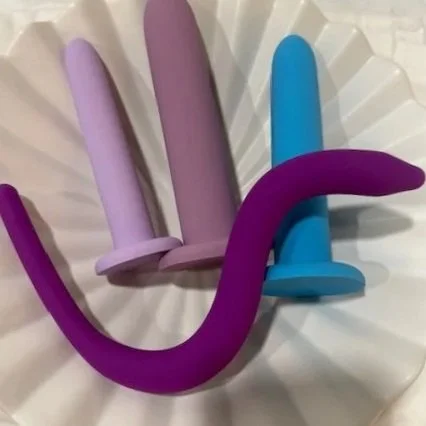
When Vaginal Wands May Be Helpful
Vaginal wands are most supportive when the pelvic floor is tight, overactive, or holding protective tension. —they are tools for gentle release.
Conditions where a vaginal wand may be helpful include:
Vaginismus — involuntary tightening of the pelvic floor that makes penetration painful or difficult.
Dyspareunia (painful intercourse) — especially when muscle tension or trigger points contribute to discomfort.
Chronic pelvic pain — including pain that radiates to the hips, abdomen, or low back when pelvic floor tension is involved.
Bladder pain or urinary urgency — sometimes linked to an overactive pelvic floor.
Tailbone pain (coccydynia) — when tight pelvic muscles pull on the coccyx.
Anal or rectal pain — often related to pelvic floor muscle spasms or trigger points.
Postpartum pelvic floor tension — especially when scar tissue or protective muscle patterns develop after childbirth.
Pain with arousal or ejaculation (for people with penises) — when pelvic floor tension is a contributing factor.
These conditions can overlap with many others, so a professional assessment is important before using a wand.
When a Vaginal Wand May Not Be Appropriate
There are situations where a vaginal wand may not be recommended. These include:
Active infections
Unexplained vaginal bleeding
Pelvic organ prolapse symptoms such as heaviness or bulging
Sharp, shooting, or worsening pain
If any of these apply, a different approach is usually more appropriate.
Why Professional Guidance Matters
Pelvic floor symptoms can arise from many different sources—tension, weakness, coordination challenges, scar tissue, or protective patterns.
A pelvic floor physical therapist can help determine:
What your pelvic floor is doing
Why it may be responding that way
Whether release work is the right next step
How to use a wand safely and comfortably if appropriate
Often, the first steps involve breathwork, gentle mobility, nervous system down‑training, or hands‑on support in the clinic. A wand can be a great tool for continued work at home.
Reconnecting With Your Pelvic Floor
Healing the pelvic floor is not about forcing change—it’s about building trust with your body. Tools like vaginal wands can be supportive when used at the right time and in the right way, but they are just one part of a much bigger picture.
If you’re curious whether a vaginal wand may be helpful for your symptoms, speaking with a qualified pelvic floor physical therapist is an important next step. They can help you understand what your body needs and guide you through a plan that feels grounded, supportive, and tailored to you.

